Dave Walsh: Viewshed
January 15 – February 27 2026
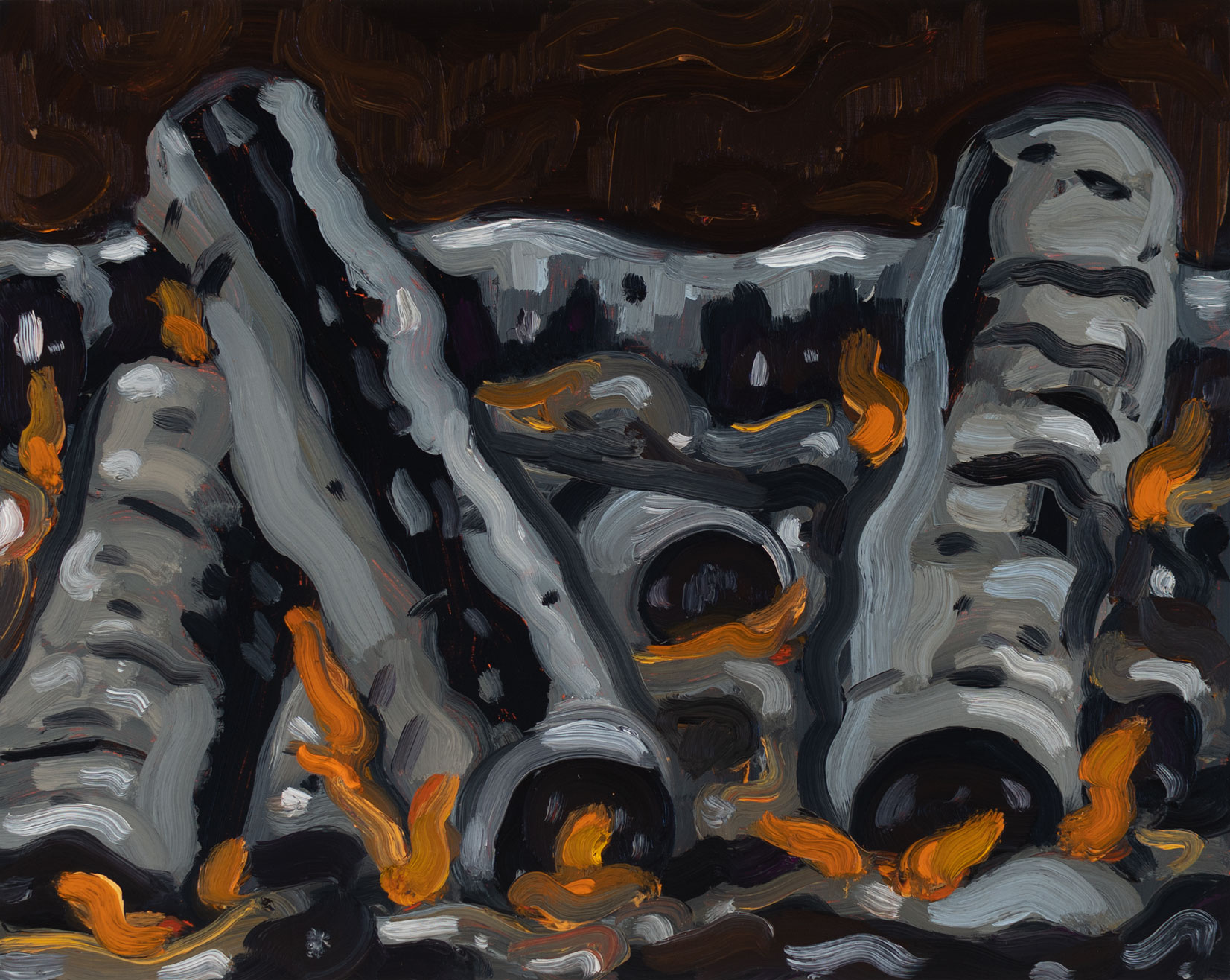
The paintings in this exhibition continue the artist’s dialogue with the Hudson River School. Like those painters, Walsh’s landscapes are focused on areas in and around the Catskills in New York state. This was an area of great importance for 19th century painters like Thomas Cole and Frederic Chrurch, whose depictions of the region helped to establish what they deemed to be a distinctly American art that propagated the young nation’s vast, natural beauty with divine favor and the promise of Manifest Destiny. Like an embedded journalist, Walsh spends extended time hiking, camping and immersing himself within the location in order to develop a somatic relationship with the environment in addition to studying its rich history. But ultimately, the artist’s overarching concern with abstract principles of composition and positive/negative space dominate the work.


Afterburn, Peep Projects, 2024


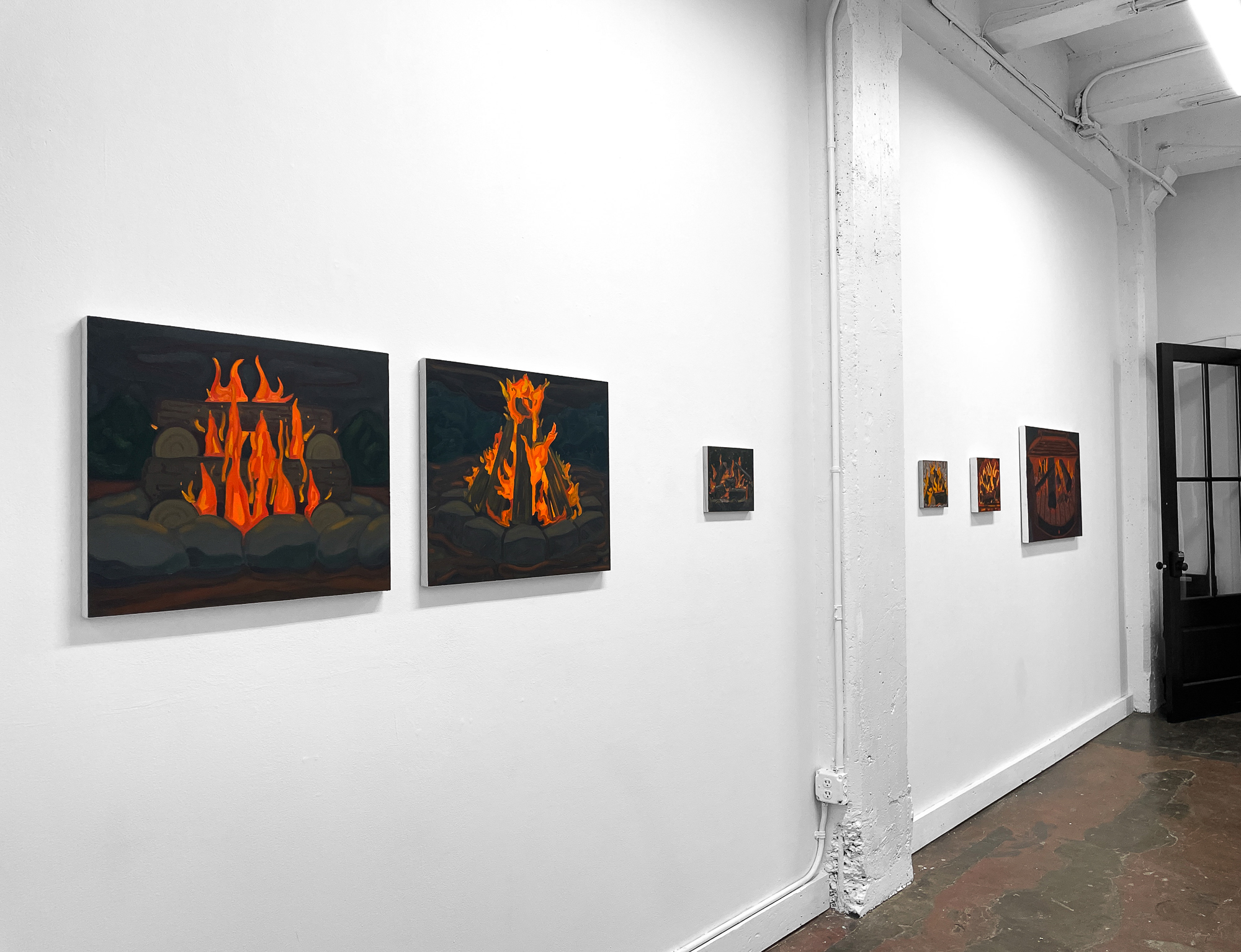

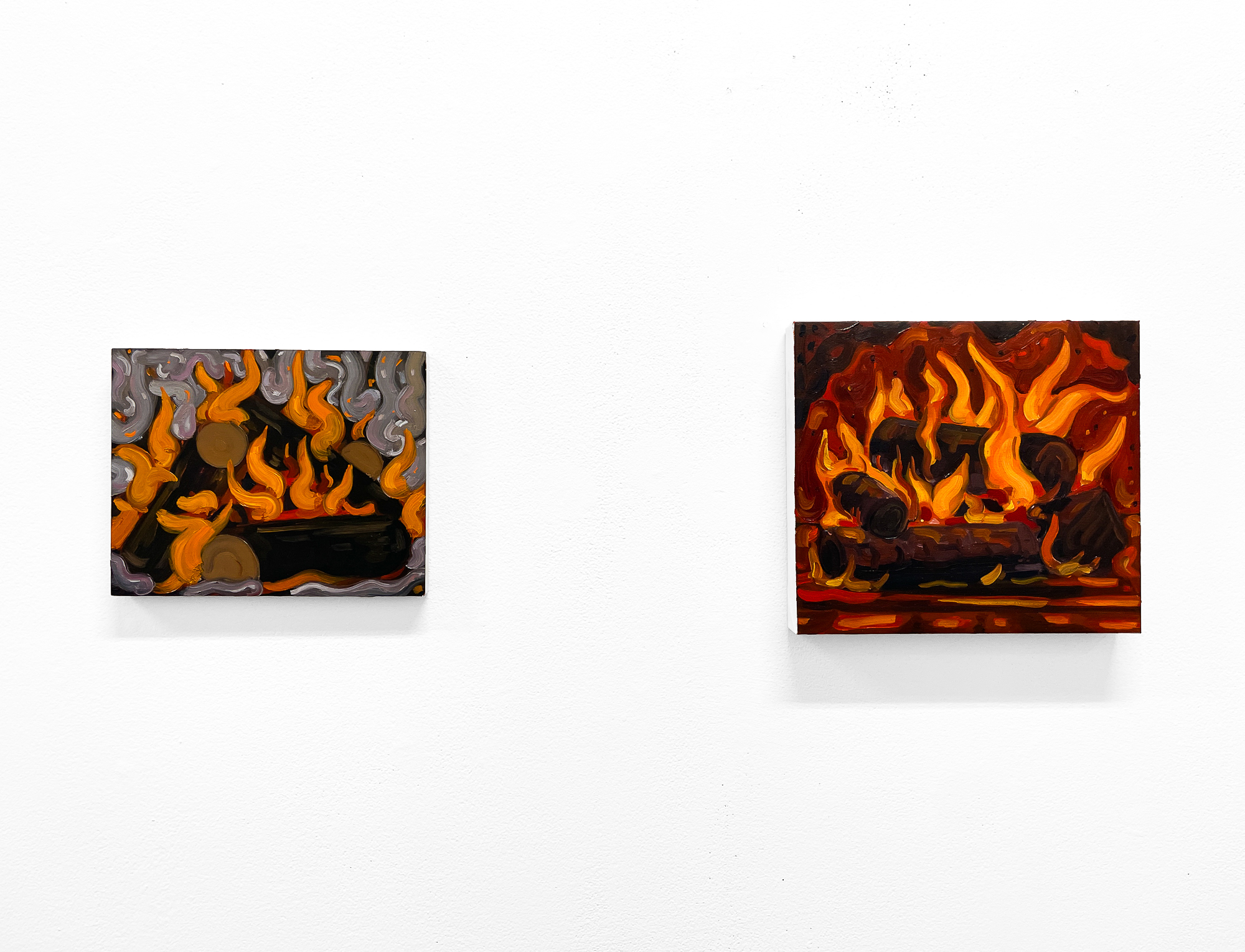

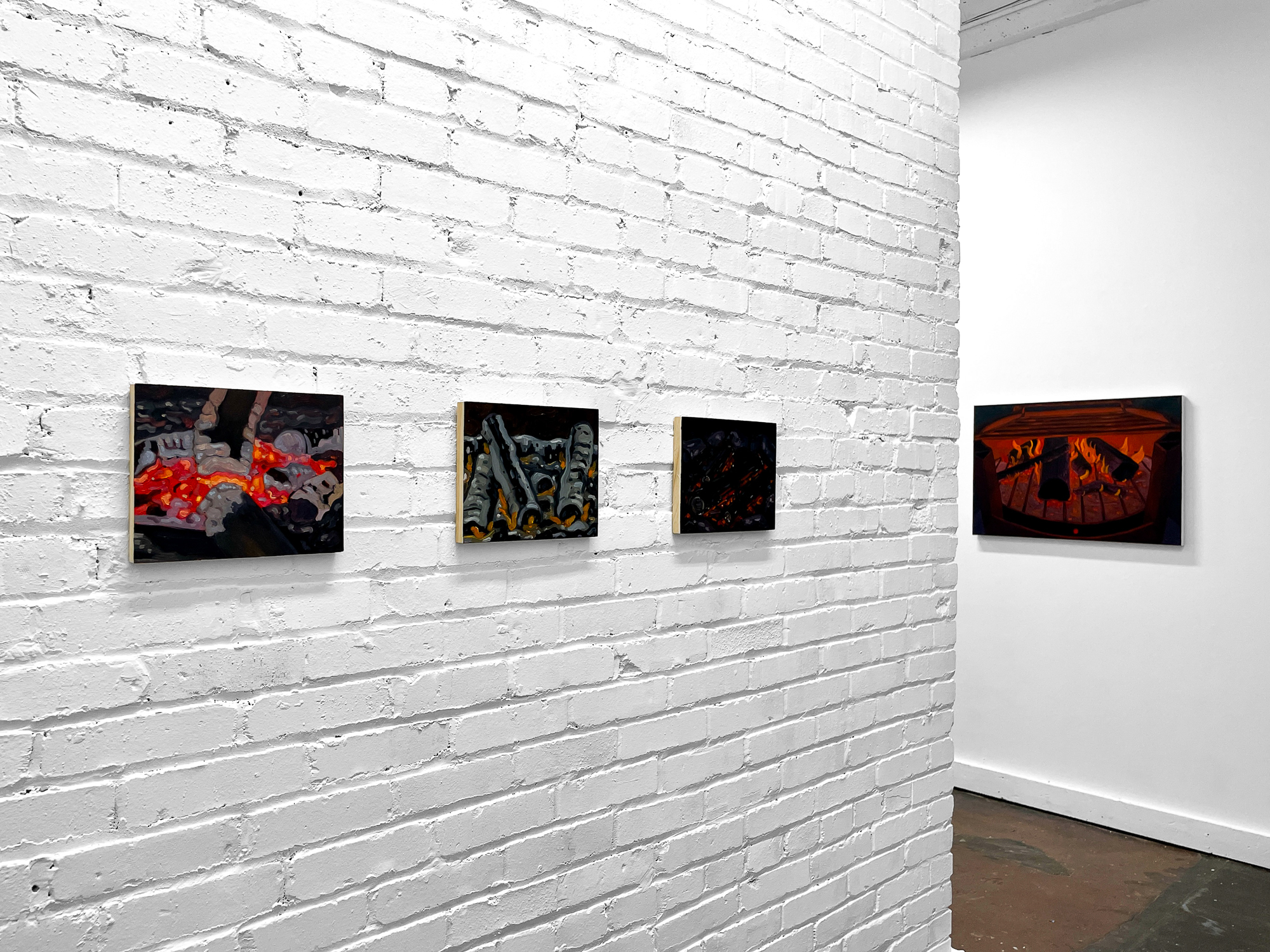

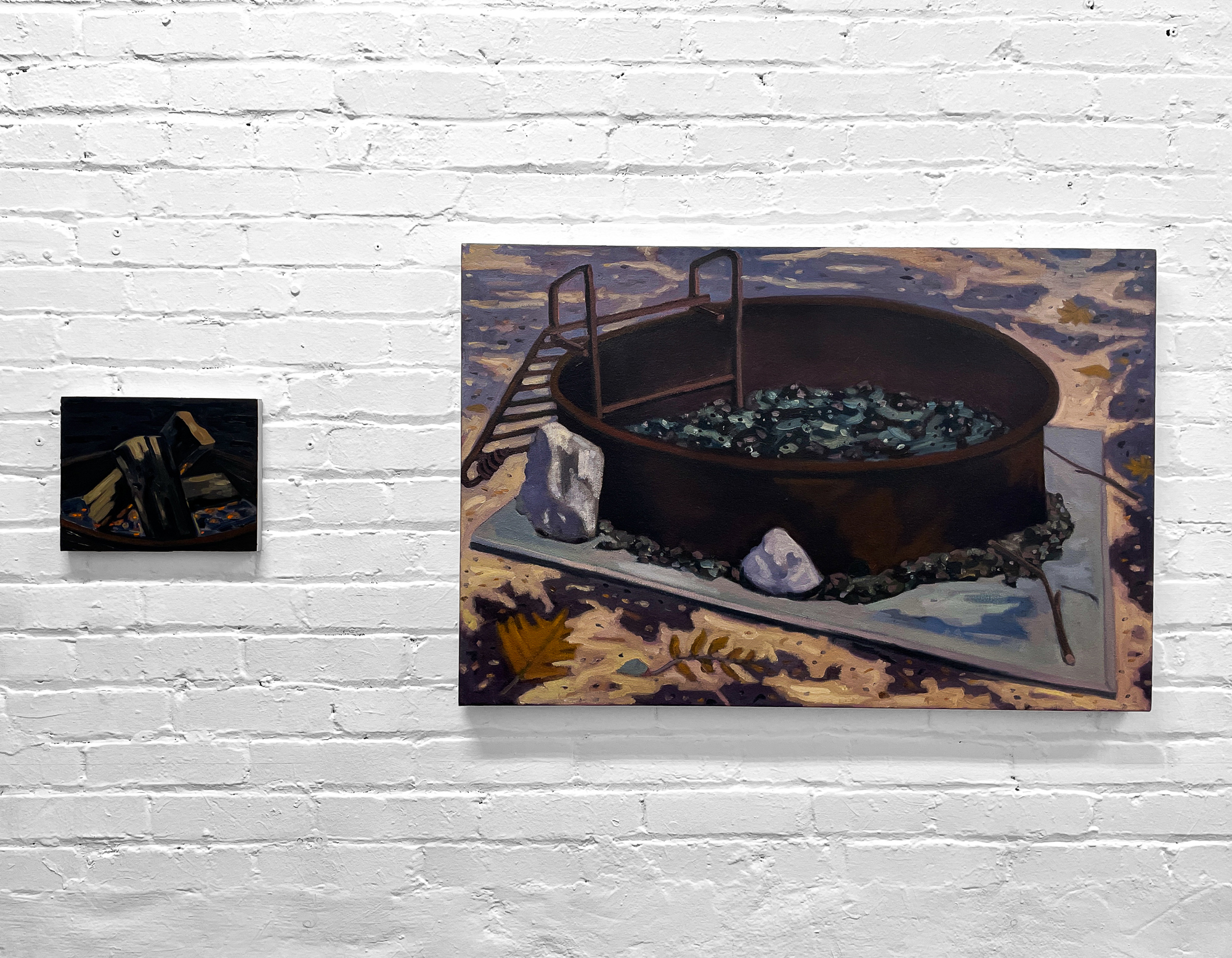

Peep is pleased to present Afterburn, a solo exhibition of new paintings by Dave Walsh. Walsh is a painter whose work engages with how landscape and nature in the contemporary moment have been shaped by problematic yet culturally coveted traditions of depiction in 19th-century American landscape paintings, photographs, and the creation of the National Parks.
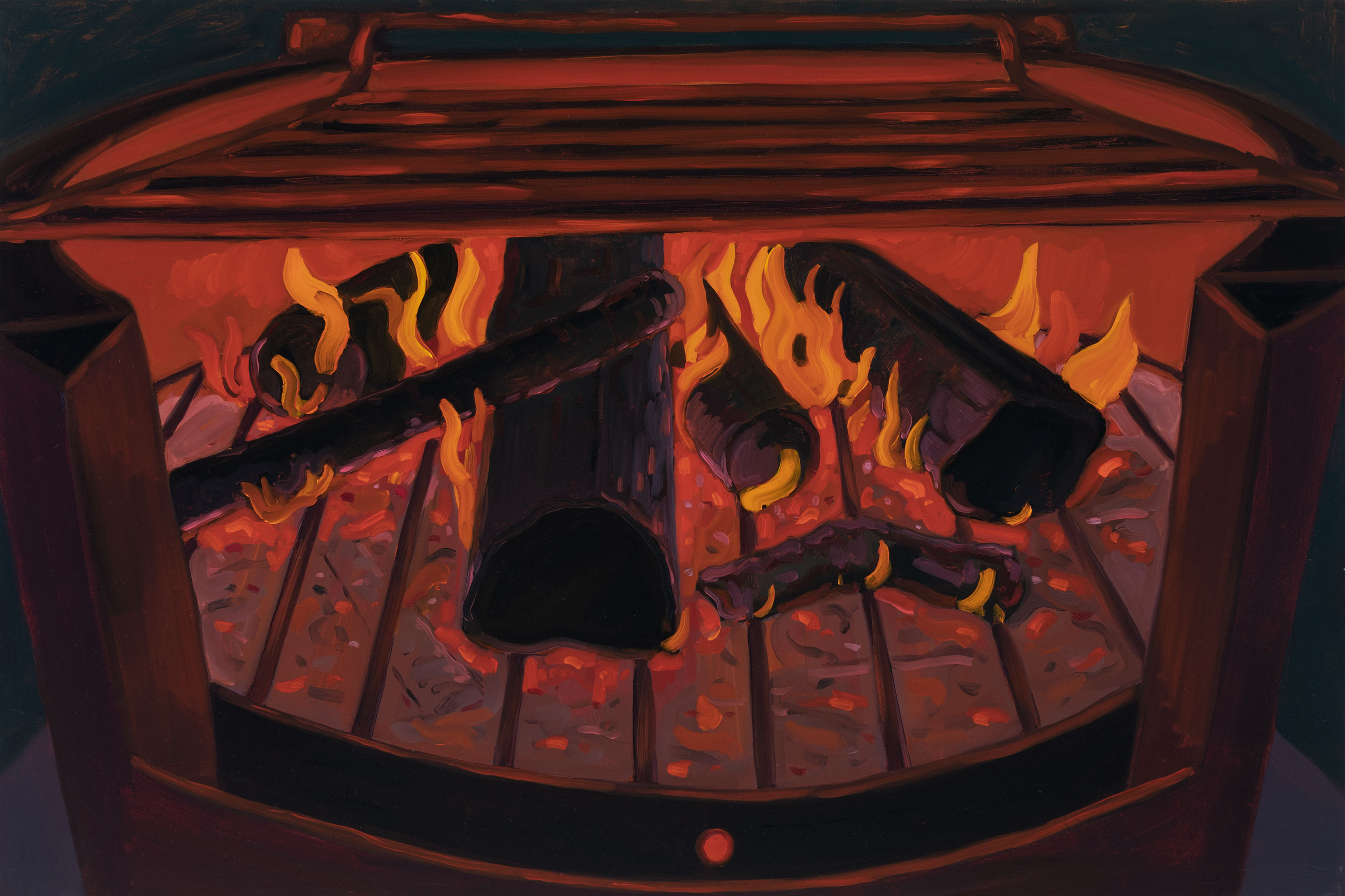
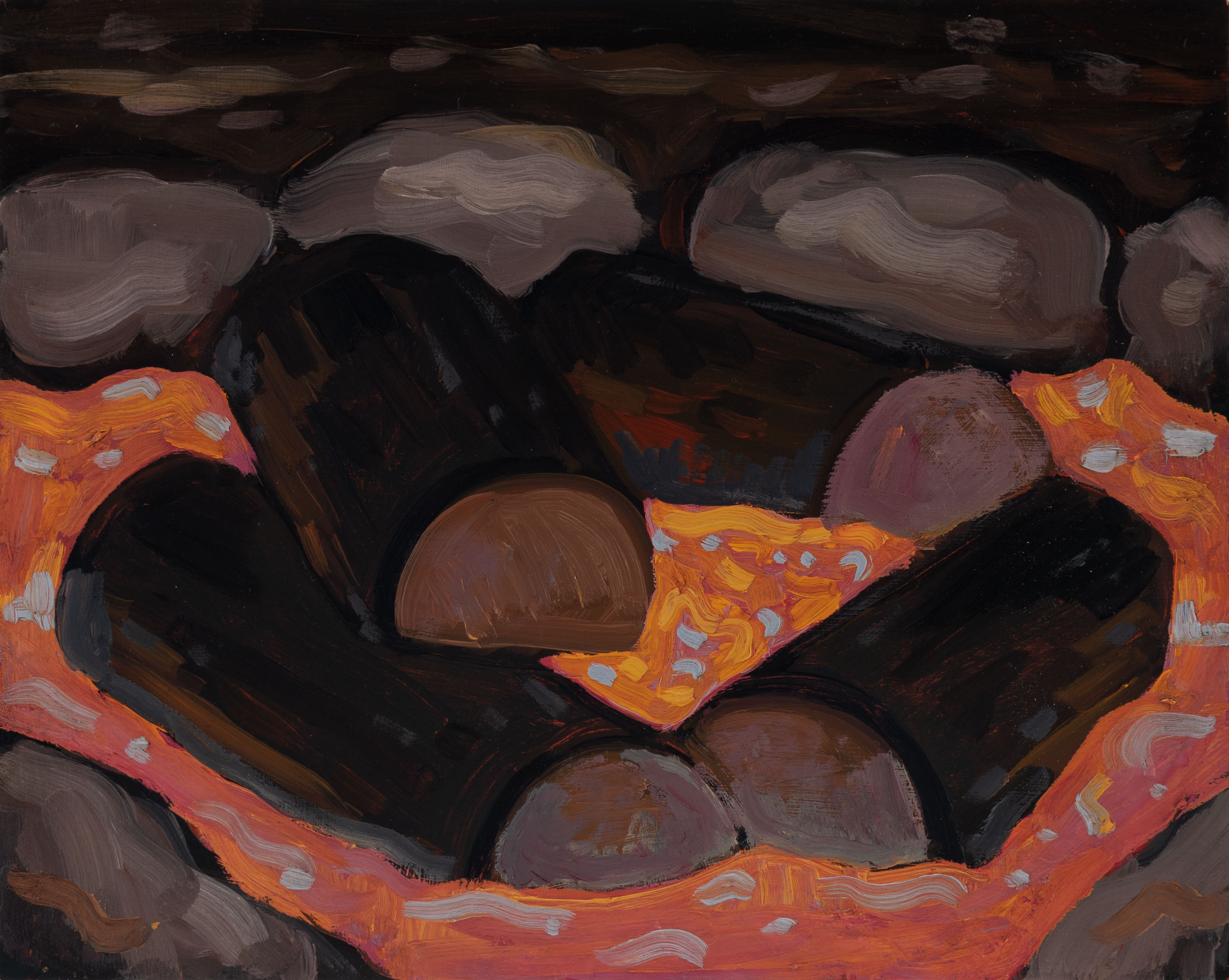
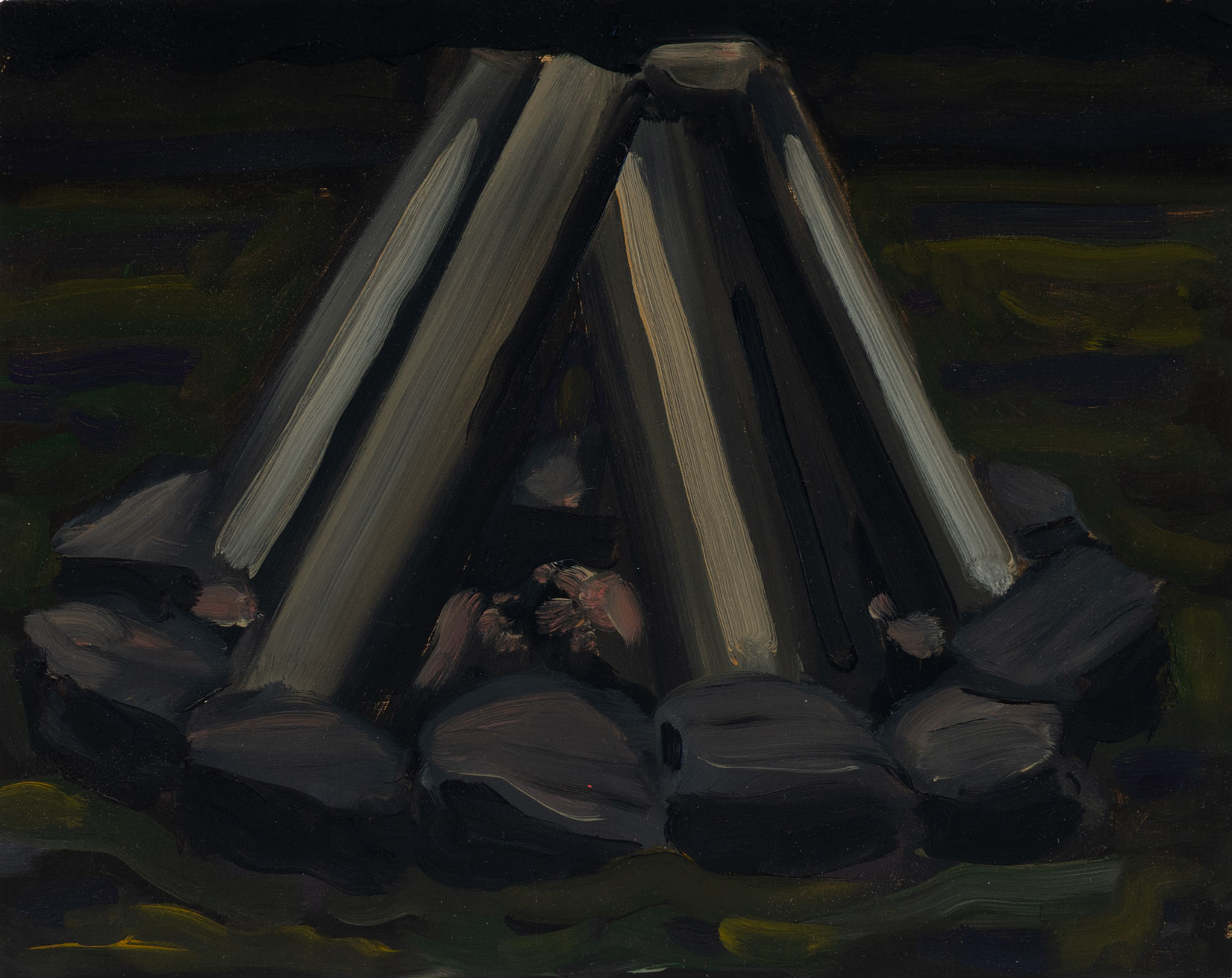
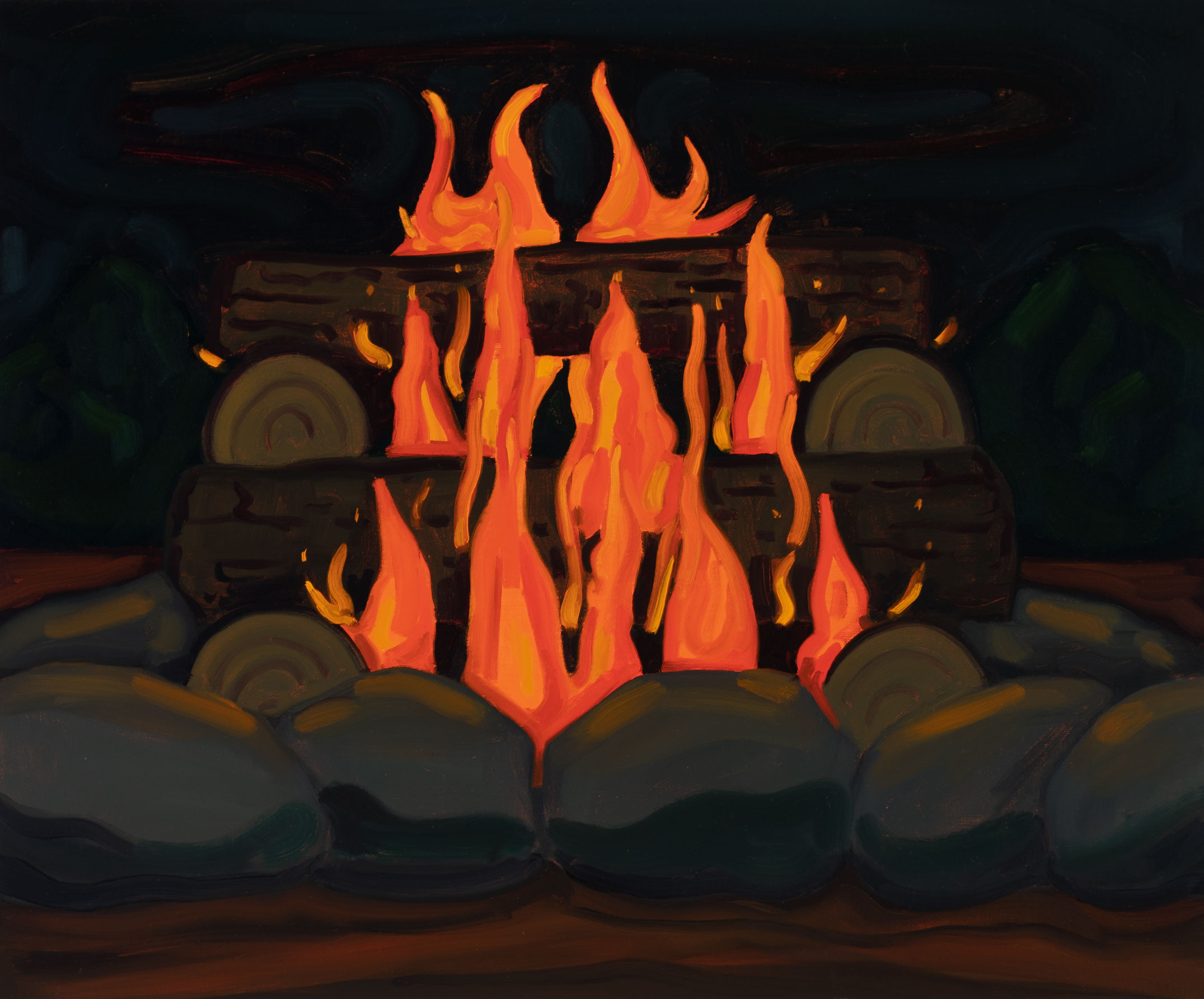
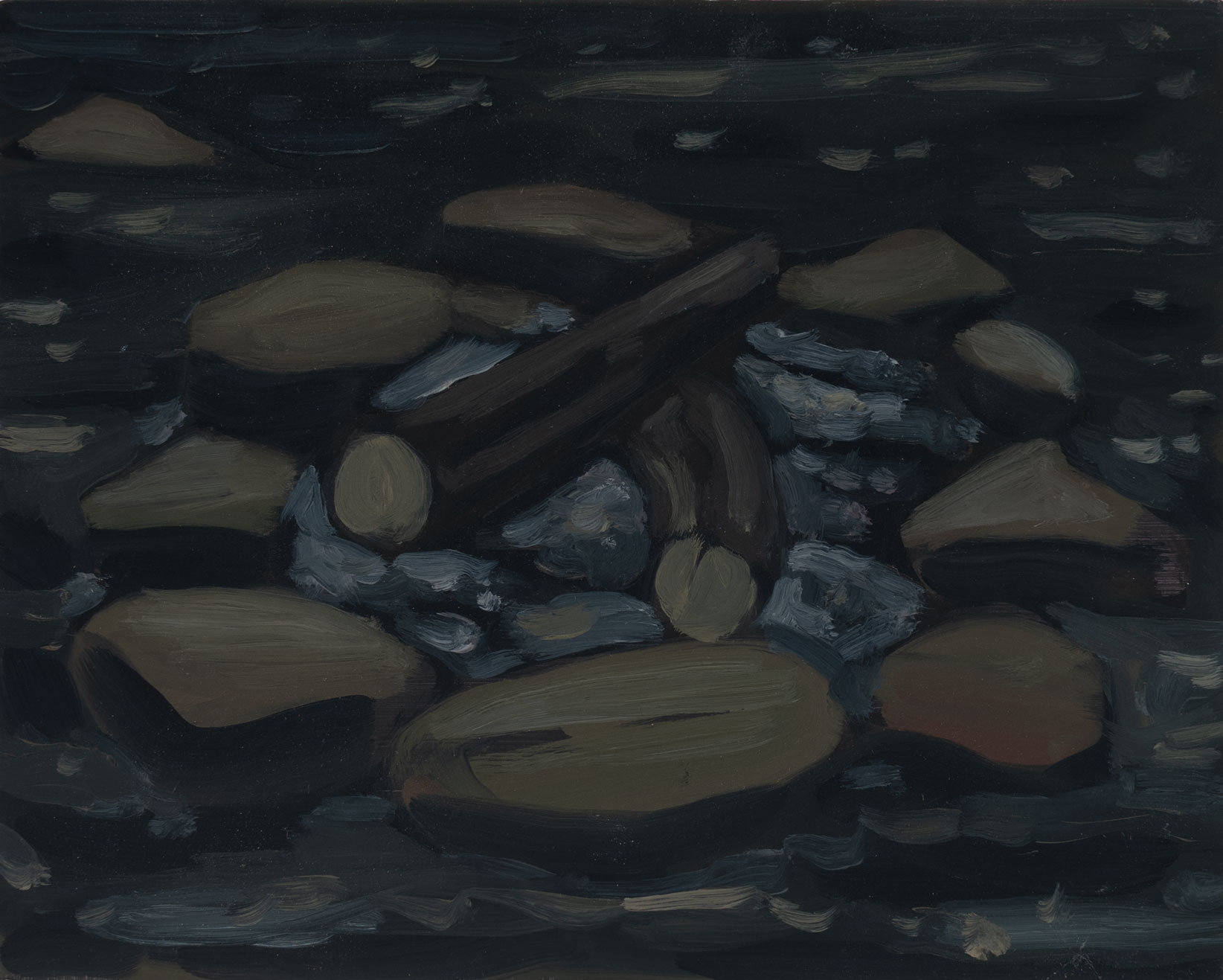
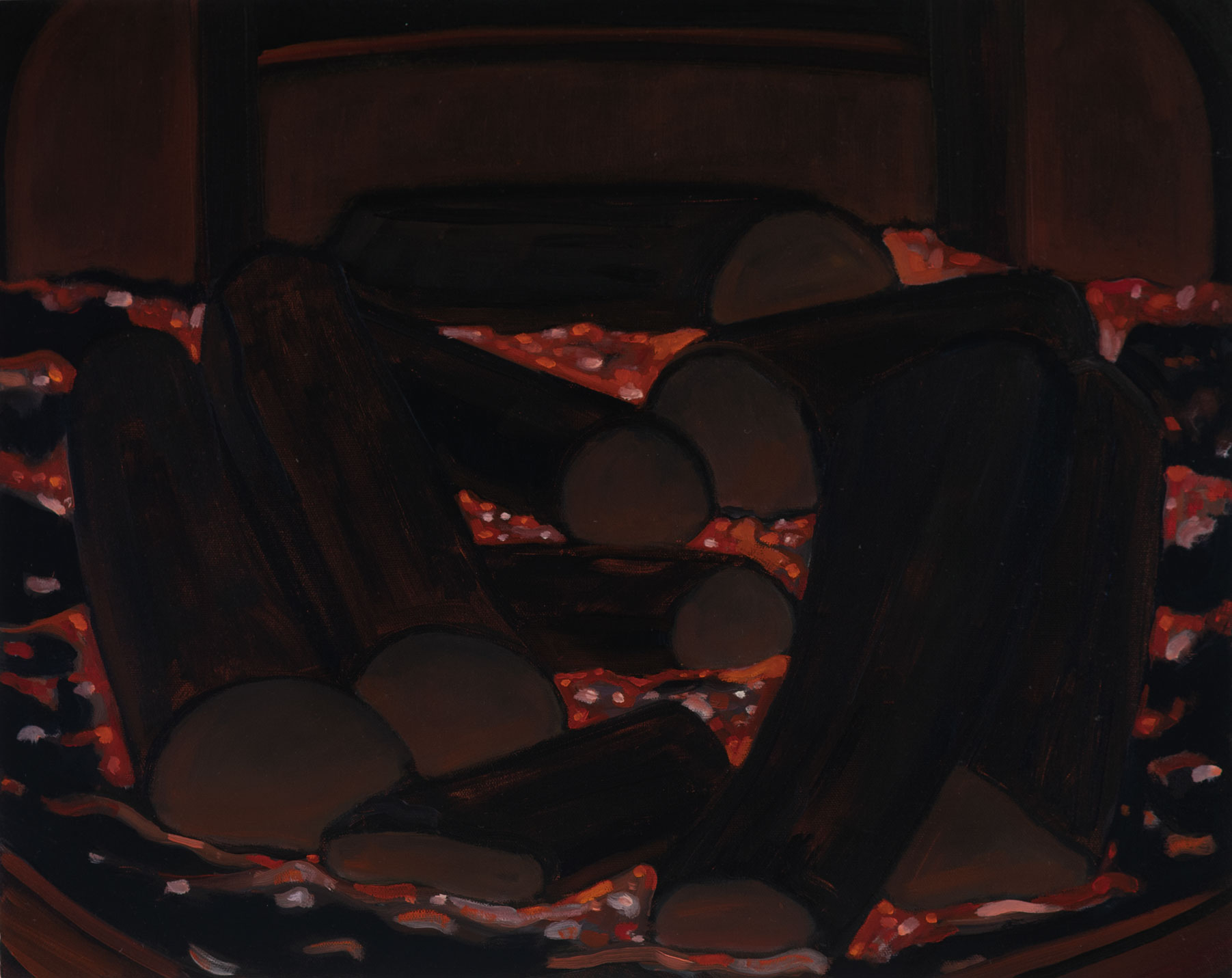
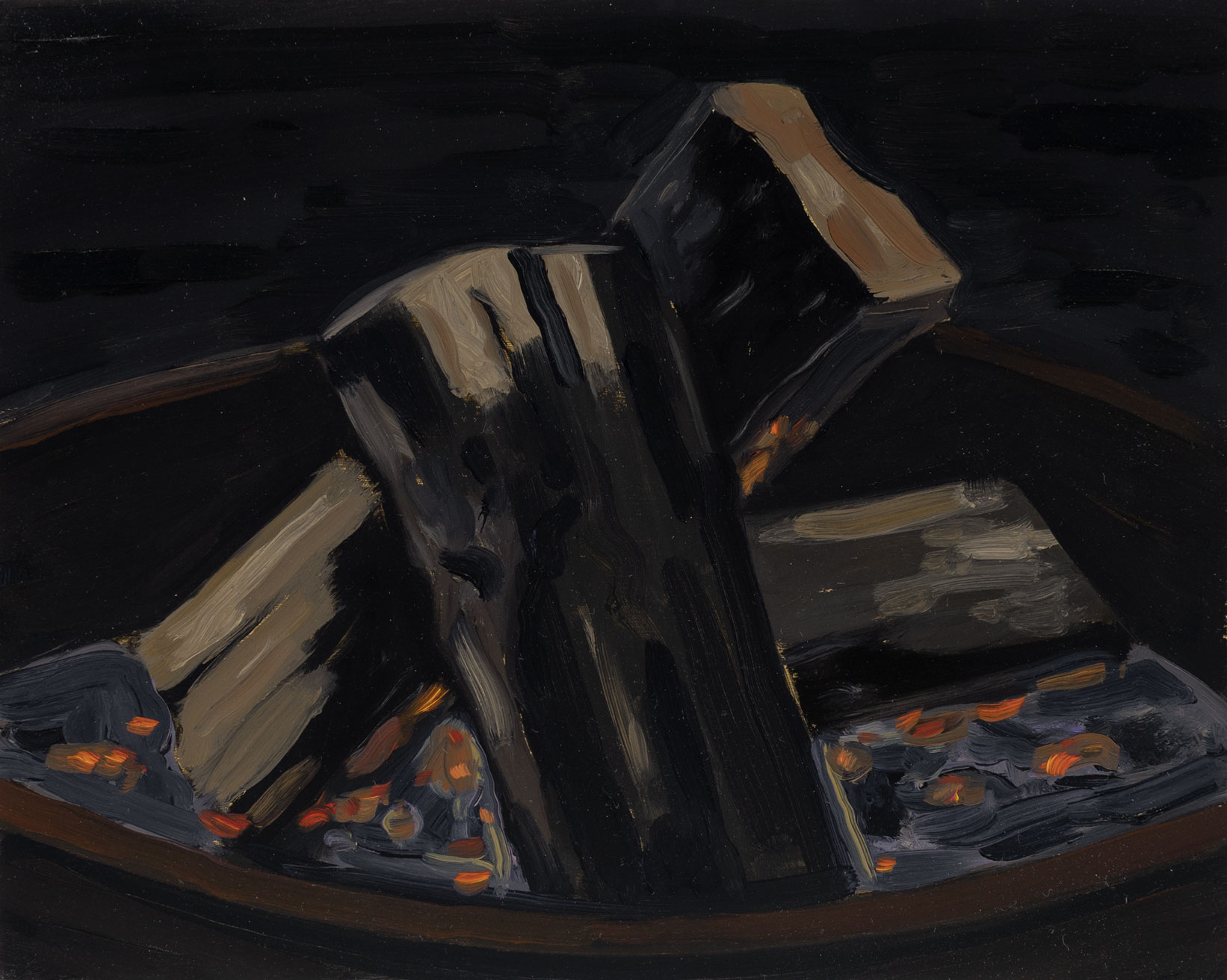
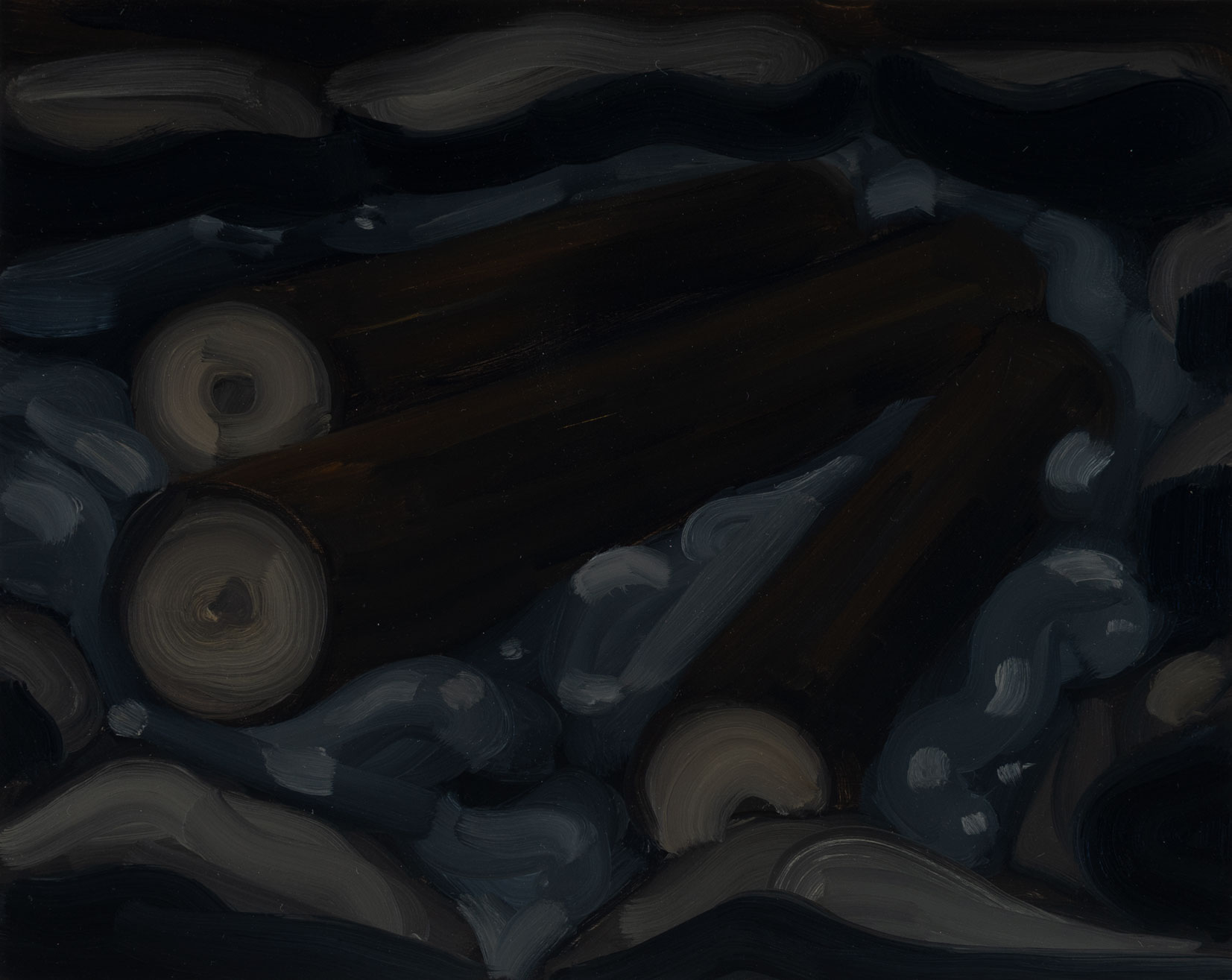
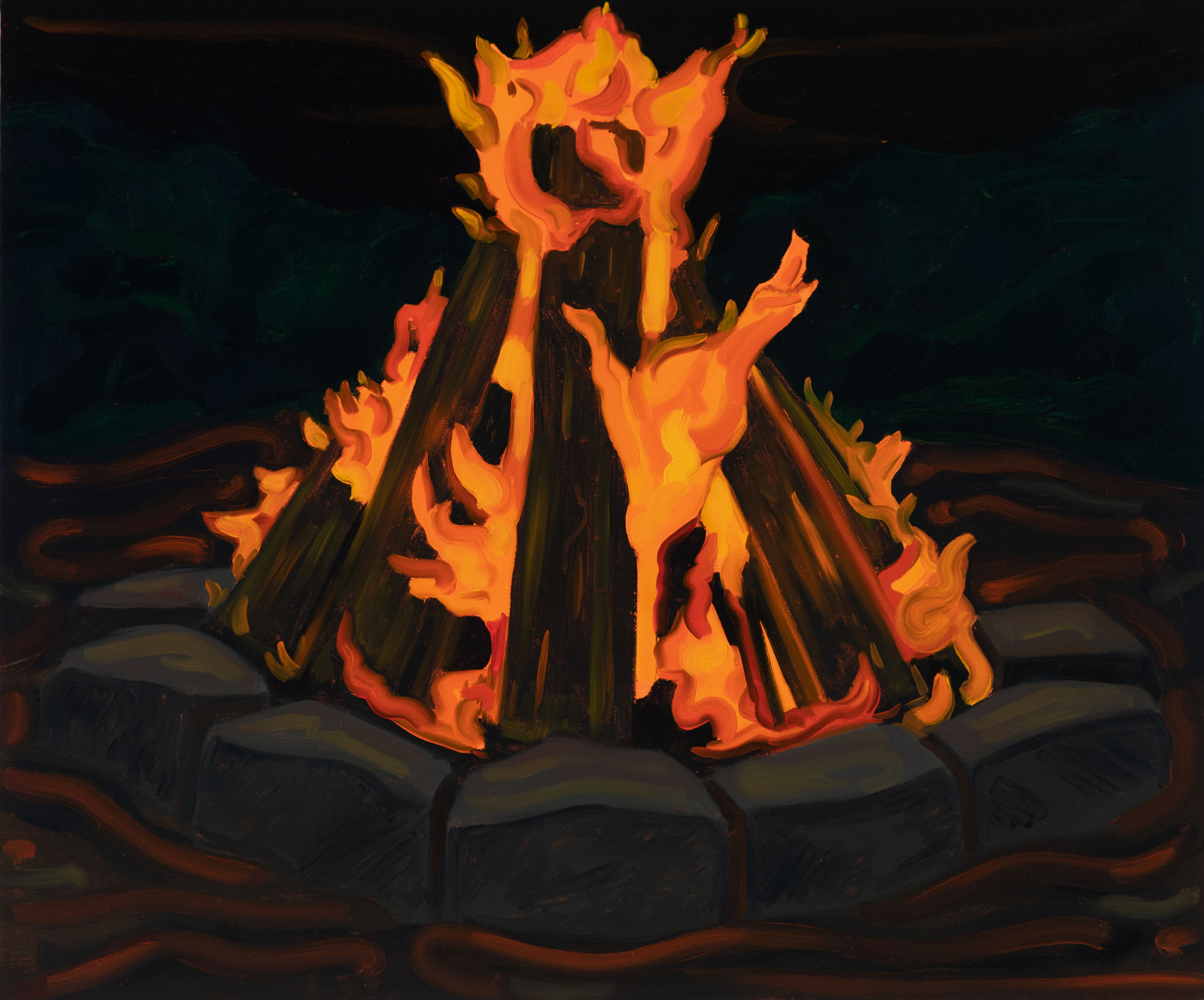
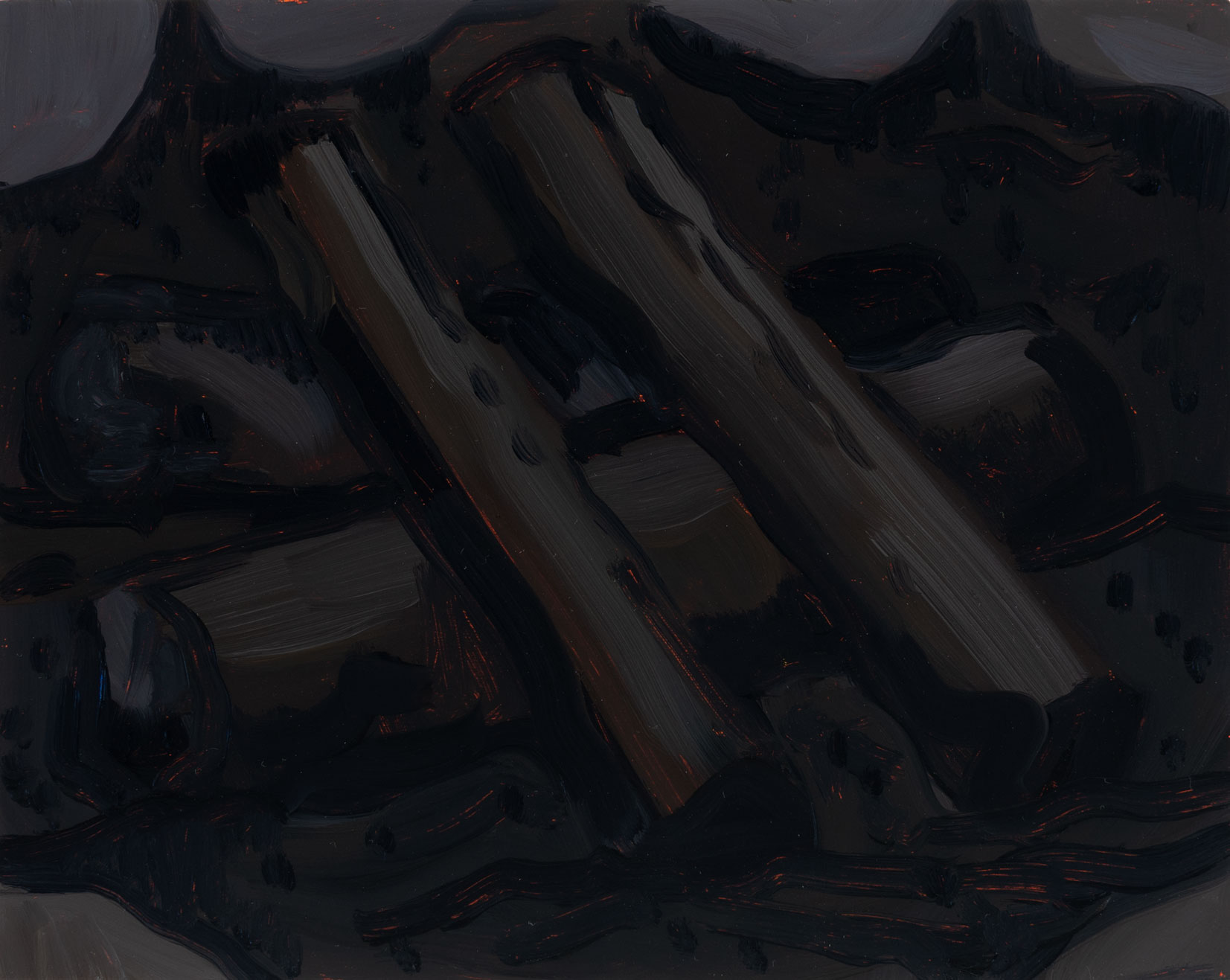
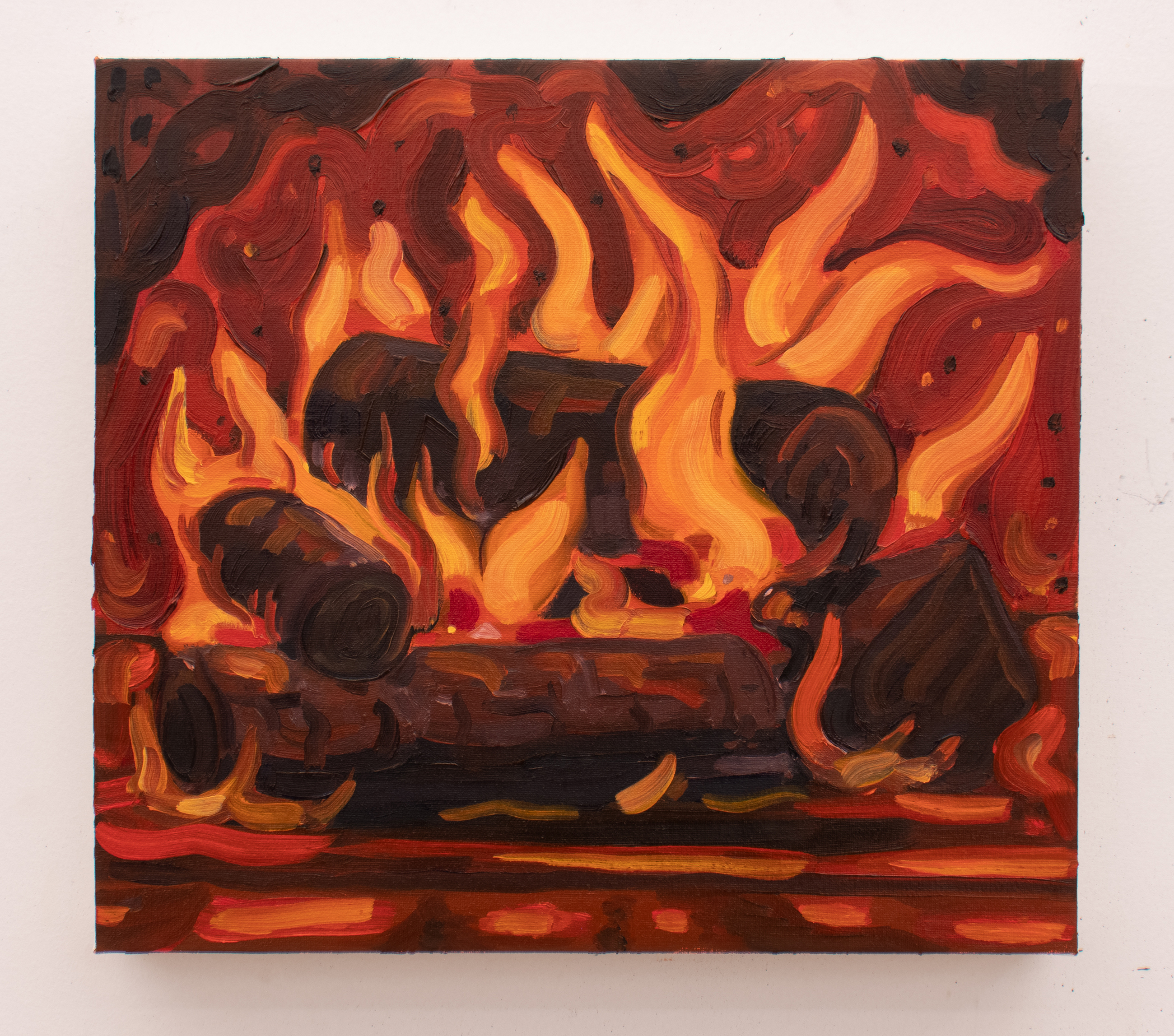
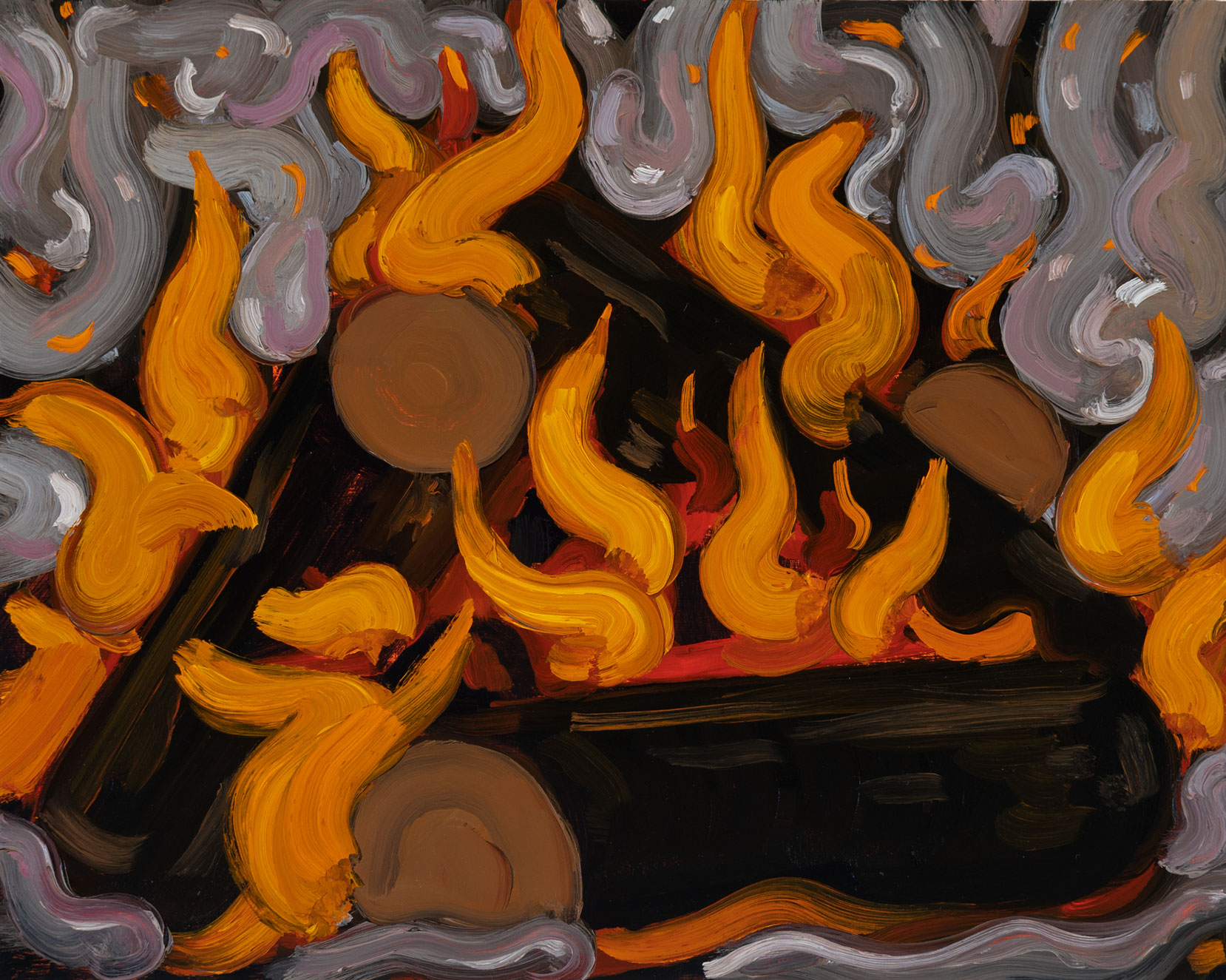
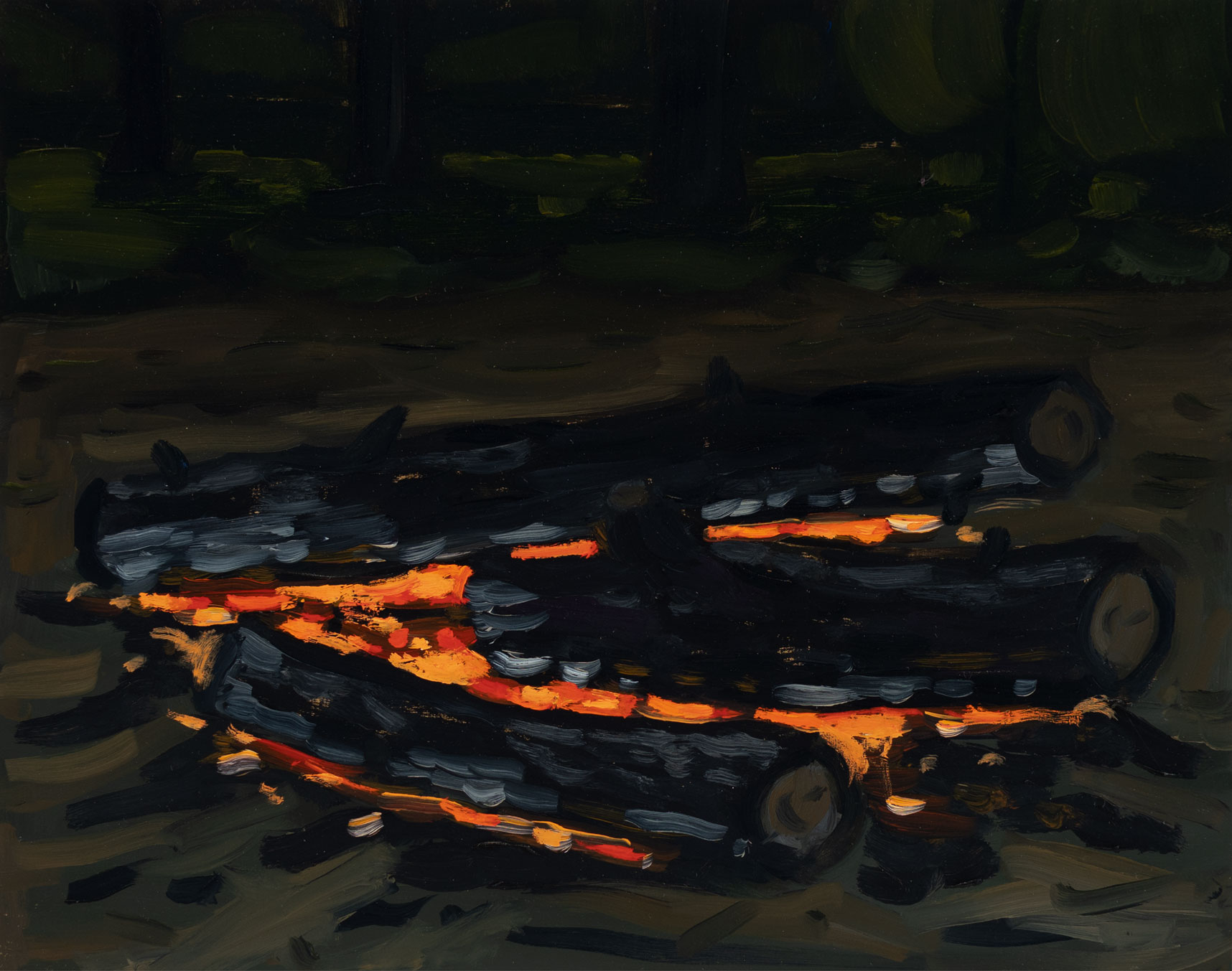
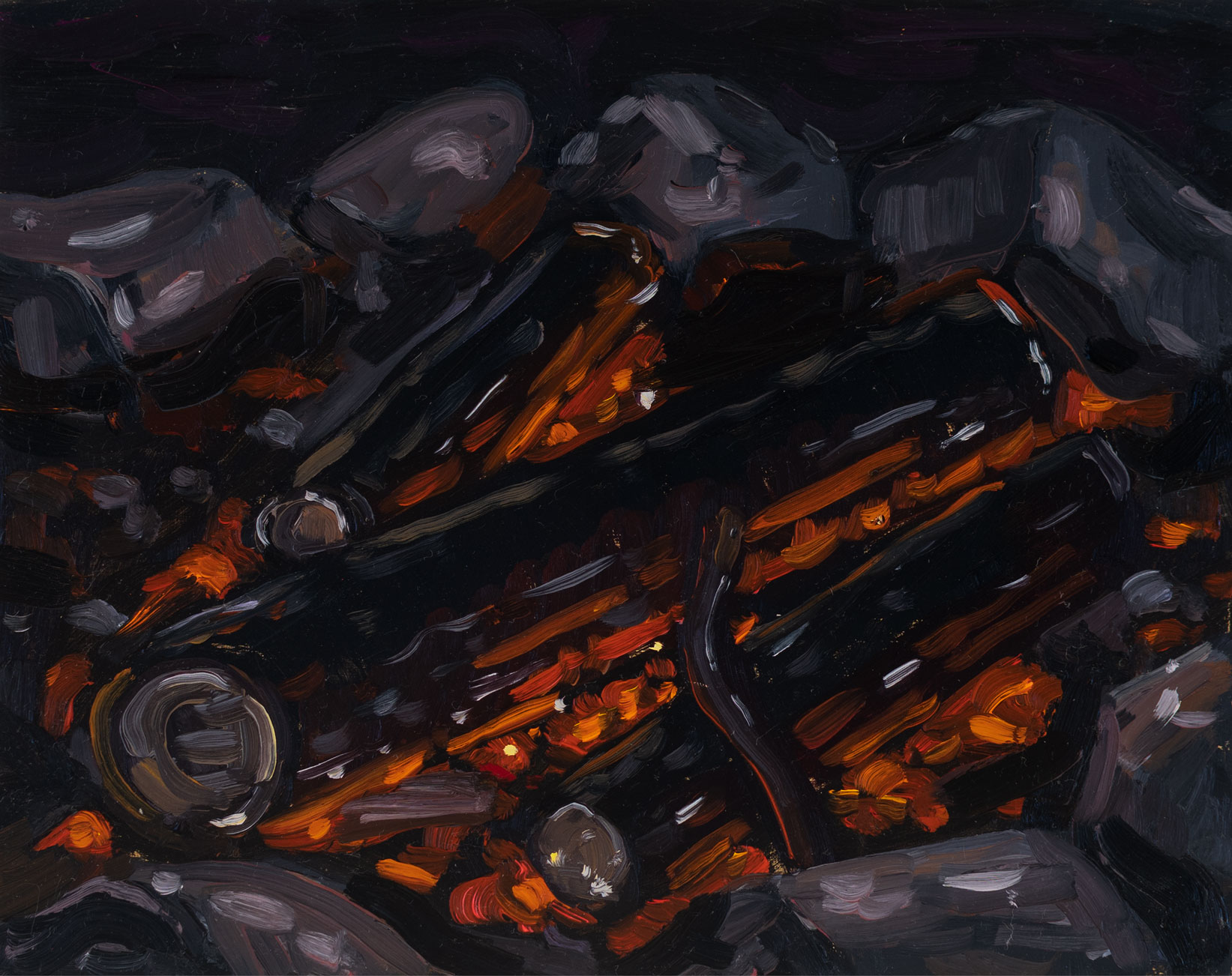
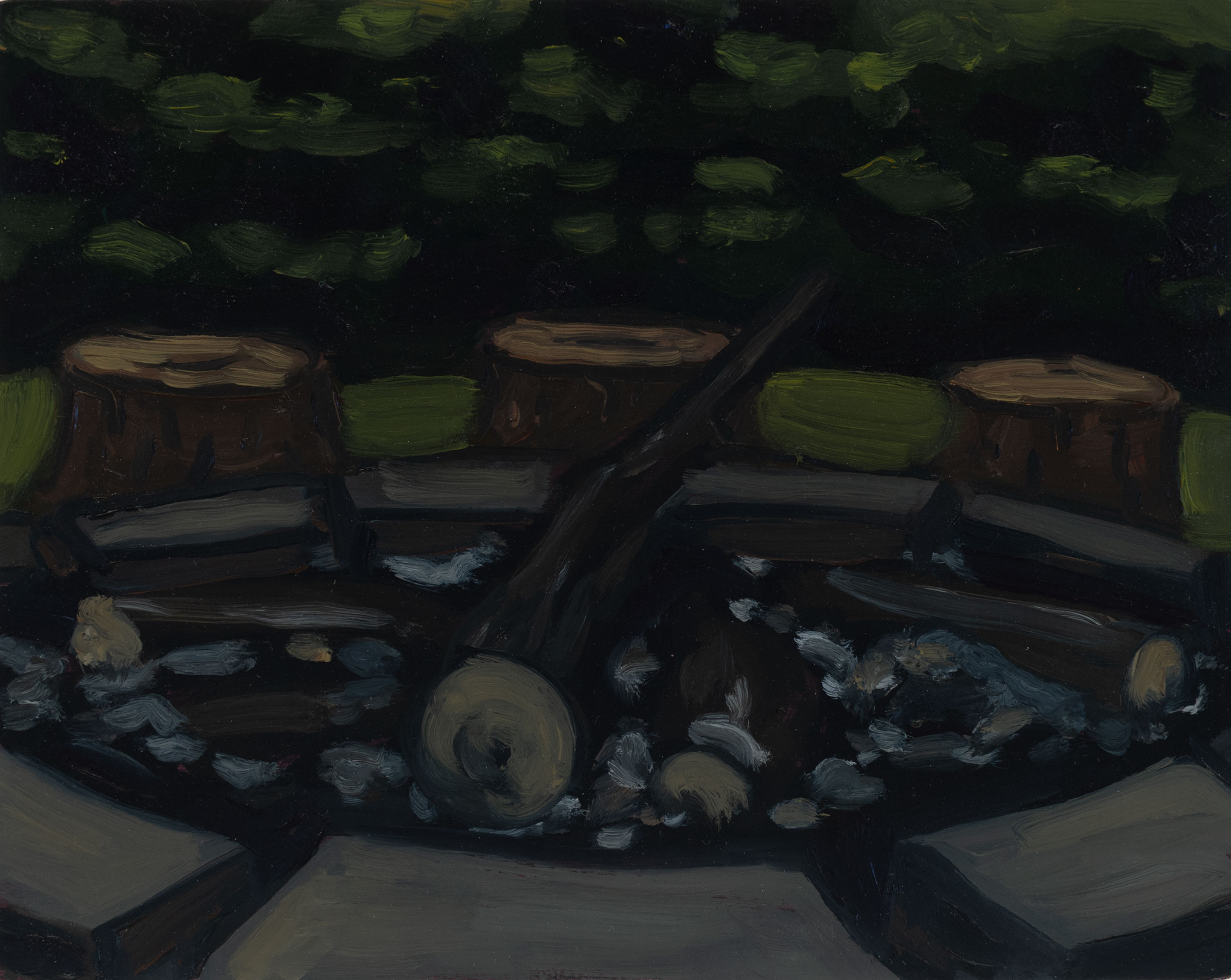
In this series of small oil paintings, Walsh is investigating a familiar ritual of outdoor recreation: the campfire. Various states of combustion are depicted– some fires rage while others simmer and many are unlit. Some feel tended to and others ghostly, unlit and outside of time. There is no clear distinction if these logs are assembled for a fire about to be ignited or abandoned.
Walsh situates the fire within the frontier myths of Manifest Destiny in this country where bushcraft influencers and wilderness survival shows like Alone are widely consumed. The frontier no longer resides on the edge of a westward march but skulks in the shadows. It lives in the mundane objects at campsites and carries a weight of history, violence, and untold stories.
If the campfire is a celebration of getting back to nature, its abandonment in the future will be a sign that we are never getting closer to understanding nature further. It reveals a flaw in familiar nature mythologies of preservation and wilderness where appearances are cherished over ecology. The land becomes a stage for actions of overcoming and conquering rather than care and cultivation.
In the United States, a past that never was is ever present in the ritual of the campfire. A past of unpeopled wilderness and untouched nature. In the history of this nation and its destruction, we find ourselves in the morning after, staring at the ashes. The paintings in this show strive to oppose the divine light of the setting sun of Manifest Destiny. In the darkness, where appearances are reduced, a deep resounding interiority is offered to reflect on the past, the present and the future in a different light.